- 1Historic bridge hacks stemmed from compromised validator keys in centralized multisigs. FAssets achieves trustless 1:1 backing via smart contracts and cryptographic proofs.
- 2Core Vault solved the early bottleneck of agent FLR collateral limitations, allowing institutional-scale XRP liquidity to enter Flare safely.
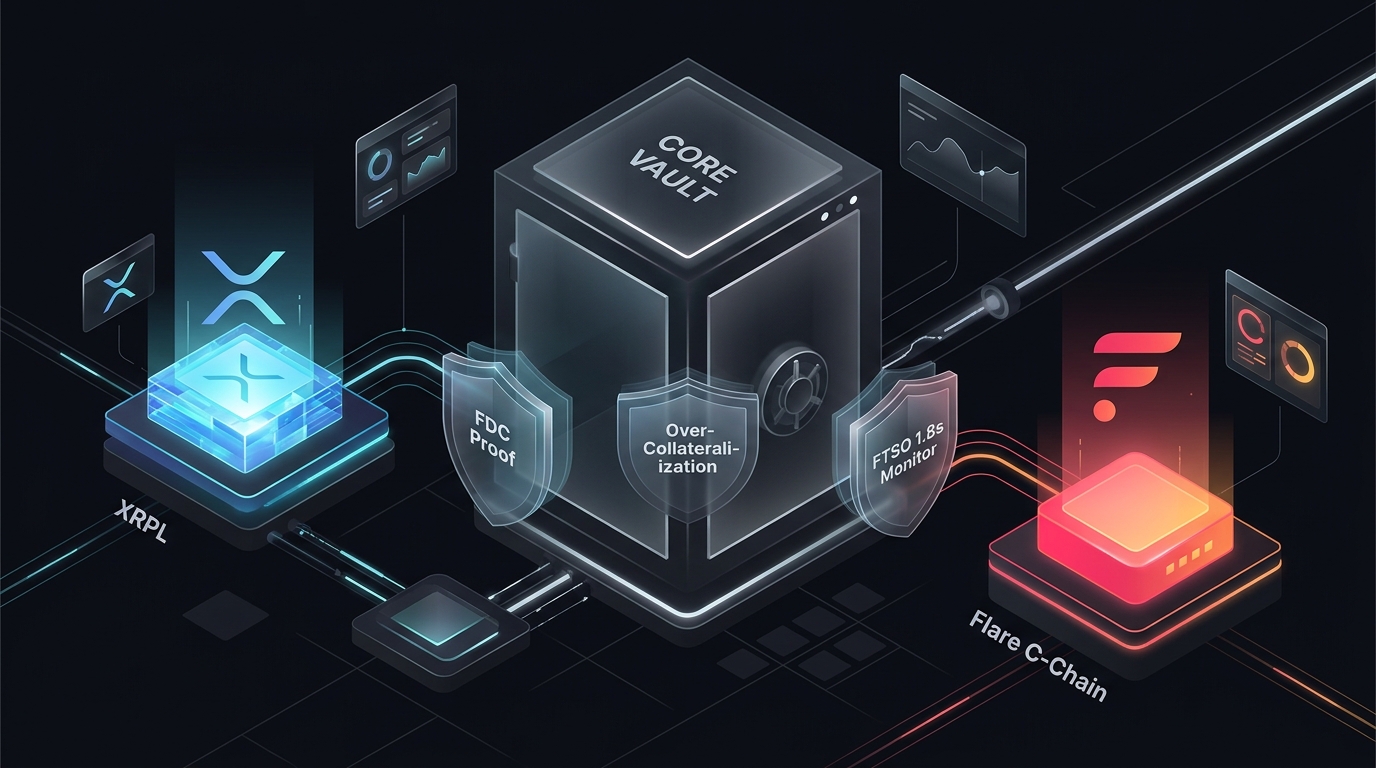
- 3FTSO real-time liquidation monitoring, Flare Data Connector (FDC) payment verification, and automated agent slashing ensure continuous solvency.
1. Why Traditional Bridges Failed
Over $2B was lost to bridge exploits in crypto history because centralized custodians held the underlying assets. Flare's /tech#fassets system replaces human trust with programmatic over-collateralization and state verification.
Legacy Cross-Chain Bridges vs. Flare FAssets (Triple Defense)
Traditional wrapped bridges that lost billions in hacks rely on custody keys, whereas FAssets enforces solvency through cryptography and over-collateralization.
If the Custody Keys Are Compromised, Backing Is Lost
1. Reliance on Multisig / Admin Keys
Underlying assets sit in a single vault controlled by a small group of signers—an irresistible target for hackers.
2. Unbacked Wrapped Tokens Crash to Zero
If the vault is drained, wrapped tokens on the destination chain instantly lose their 1:1 redemption backing.
3. Third-Party Relayer Trust
Users must trust external bridges and off-chain relayers not to collude or suffer key leaks.
Protected by Cryptographic Proofs & >100% Locked Collateral
Defense 1: FDC Cryptographic Payment Verification
Flare validators directly verify XRPL transaction inclusion via Merkle proofs before any FXRP can be minted.
Defense 2: >100% Over-Collateralization
Agents must lock more value in FLR and stablecoins on Flare than the XRP they facilitate.
Defense 3: FTSO 1.8s Monitoring & Auto-Liquidation
If collateral ratios drop or an Agent fails to redeem, FTSO triggers automatic liquidation so users are made whole.
2. The FAssets Collateral Architecture
Permissionless agents lock collateral (stablecoins and FLR) at ratios well above 100%. FTSO v2 updates prices every 1.8 seconds, triggering automatic liquidations if collateral ratios drop.
The Flare Data Connector verifies native XRPL transactions cryptographically, preventing unauthorized mints.
Trustless Security Architecture of FAssets & Core Vault
Segregated institutional vault custody paired with real-time on-chain verification and liquidation
STEP 1: XRPL Deposit & FDC Proof
User deposits XRP to the Core Vault on XRPL. Independent FDC attestors cryptographically verify payment state.
STEP 2: 1:1 FXRP Minting
Underlying XRP remains secured in the shared Core Vault; 1:1 FXRP is programmatically minted on Flare EVM.
STEP 3: Redemption & Liquidations
Instant redemption back to native XRP via FXRP burn, backstopped by 1.8-second FTSO liquidation feeds.
Zero Custodial Single-Point Risk
Eliminates centralized multisig vulnerabilities by binding collateral and state verification completely on-chain.
Scalable Capital Efficiency
Removes agent balance sheet bottlenecks, opening doors for 100M+ XRP institutional liquidity volumes.
1-Click Smart Accounts
Execute cross-chain minting and vault deposits in a single signature from native non-EVM XRPL wallets.
3. How Core Vault Unlocks Scalability
Early FAssets required agents to lock massive personal collateral for every minted token. Core Vault established shared XRPL multisig reserves that safely custody deposited XRP, dramatically lowering agent capital constraints and unlocking hundreds of millions in XRP capacity.
How the Core Vault Multiplies FXRP Minting Capacity
💡 Plain-Language Analogy: From an Agent's Pocket to a Shared Bank Vault
In v1.0, each Agent had to keep every minted XRP tied to their personal collateral limit—quickly hitting a ceiling ('minting cap full'). The Core Vault lets Agents transfer excess XRP into a protocol-governed shared vault on XRPL, freeing up their collateral so the exact same capital can mint FXRP over and over again.
Send XRP on XRPL
Reserve a mint slot and send XRP from your XRPL wallet.
FDC Proof & 1:1 FXRP Mint
FDC verifies the payment and mints 1:1 FXRP to your Flare C-Chain address.
Core Vault Escrow Frees Capacity
Backing XRP moves into the XRPL Core Vault, immediately freeing the Agent's collateral for new users.
Earn in DeFi or Redeem 1:1 Anytime
Deploy FXRP in XRPFi protocols or burn FXRP anytime to receive native XRP back on XRPL.
4. Full Lifecycle: From XRPL to Flare and Back
Users send XRP from any XRPL wallet. Flare Smart Accounts automatically mint FXRP to their address. Redemption burns FXRP and releases native XRP back to XRPL without central intermediaries. Track live FXRP mint volume and ecosystem metrics on our /now dashboard.
Related Glossary Terms
Explore glossary definitions for key concepts mentioned in this article.
Primary Sources & Official References
This analysis is substantiated by the following verified announcements, presentations, and coverage.
- 2026-08-15